New Bloodless Mushroom Release – Hydropus

I recently released some new Bloodless Mushroom music, an album titled Hydropus. It’s a collection of glitchy ambient instrumental tracks composed on various vintage synthesizers. The name comes from a genus of mushroom that grows in tropical forests.

The album art is a painting I created early in the Coronavirus lockdowns.

It’s available for listening on YouTube here:

It’s also available on Spotify and other streaming services. Enjoy. 🙂

New OJ Champagne Release – Battery Acid

I wrote a song about developing an addiction to battery acid in the pre-COVID times (2018). I performed it live a few times in Portland, Oregon. During the lockdown I recorded a version of it.

It’s available on YouTube:

It’s also available on Spotify and other streaming services.

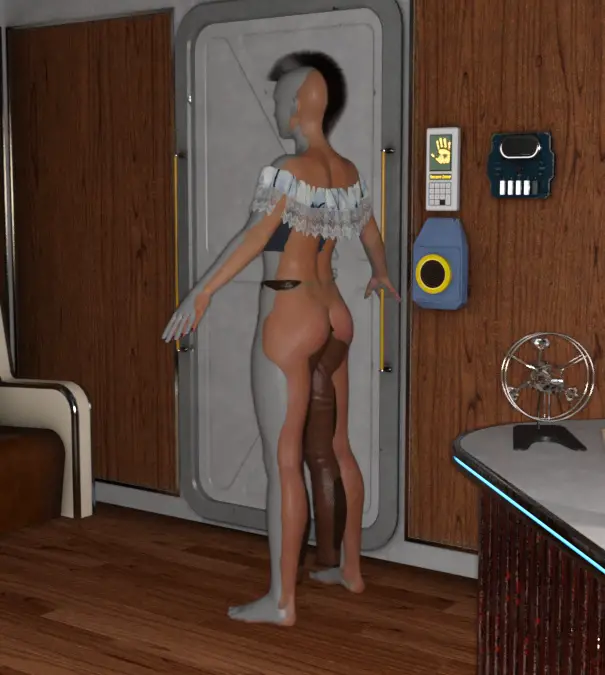
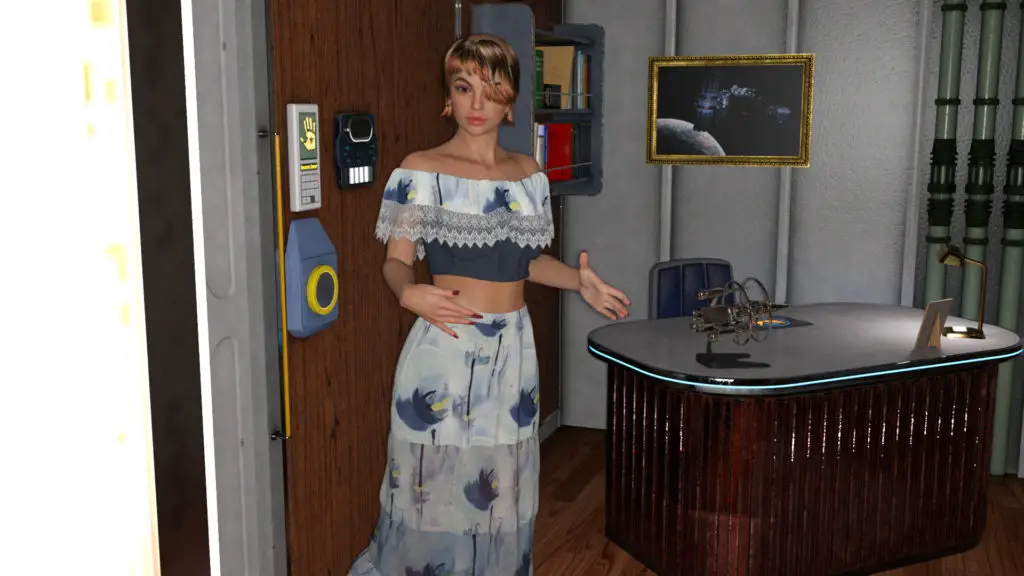
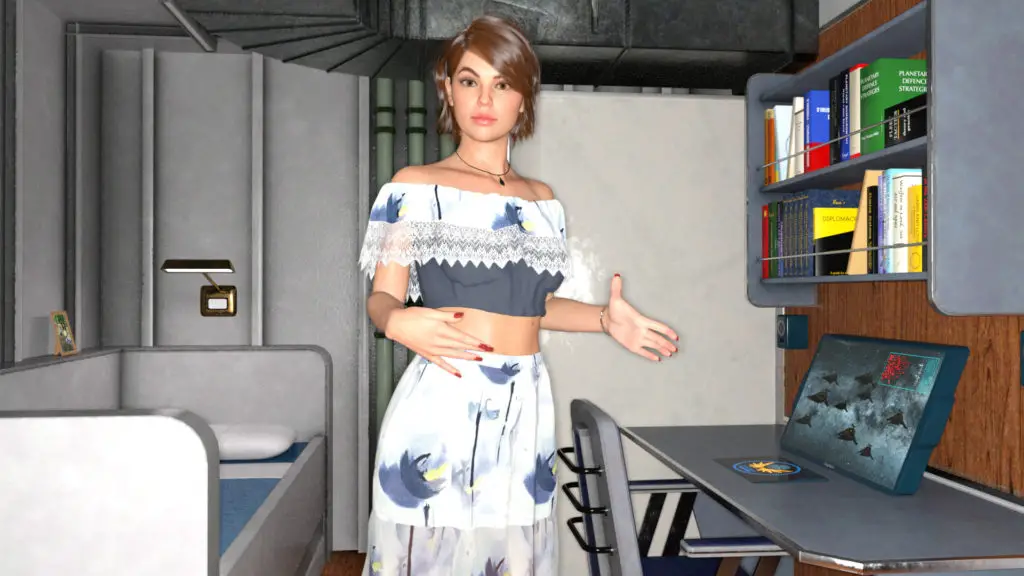
Another Little 3D Experiment – Morning Coffee

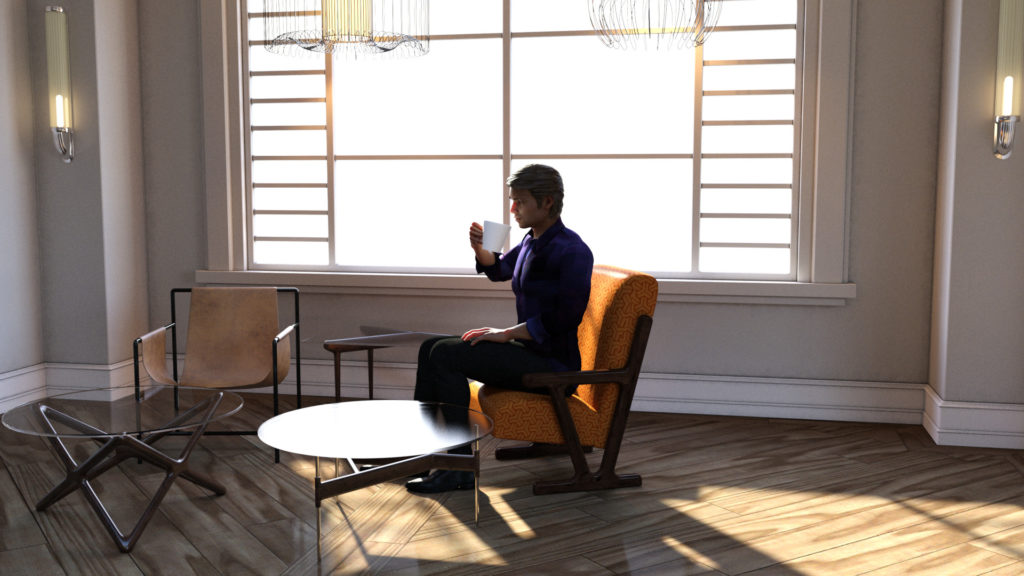
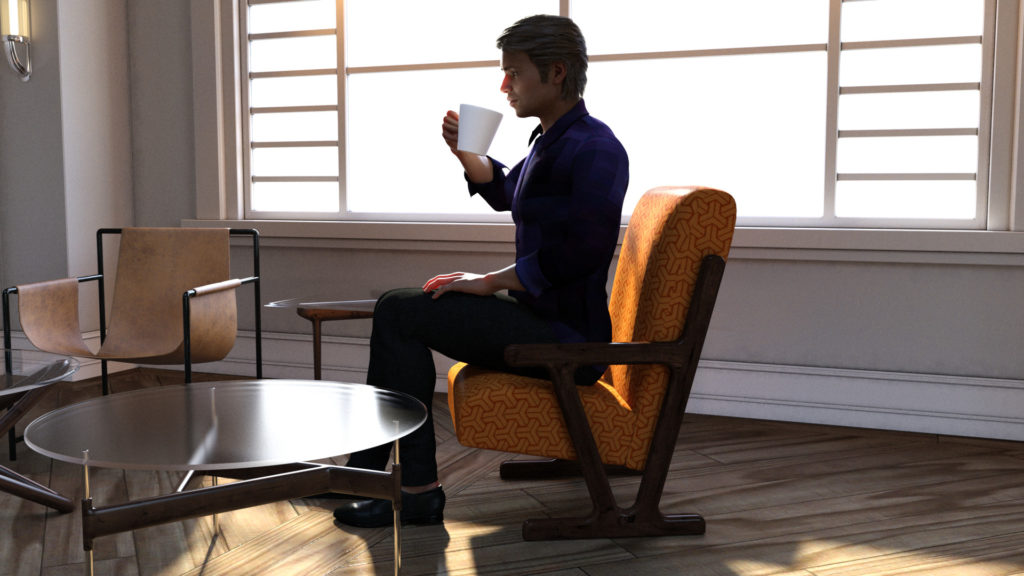
This is another little 3d experiment.

I didn’t create any of the 3d models, which are stock content for Daz 3D. I just posed the scene.

I learned how to fix “poke through” (where you can see skin sticking out through the geometry of clothes), and learned a little more about bending joints.


New Dr. Kilpatient Release – Jam 453

During the COVID-19 lockdowns, Tomasz Kordowski and I had some pretty good jams in our house, The Craniorium (named for all the mannequin heads, of course).

I polished up and released a recording of my favorite one for streaming. It’s called “Jam 453” and it’s available for listening on YouTube:

It’s also on Spotify and all the other streaming services.

Of course, that’s Tomasz Kordowski on piano, and me on drums.

A Beginner Experiment With Stop-Motion Video

Here’s a very beginner experiment.

I’m learning some of the basics of stop-motion video. I created this using Wondershare, which I bought in some sort of holiday sale a couple years ago. Wondershare works pretty well for basic video editing, and if you want something that isn’t too complicated, I recommend it.

Subscribe to the channel if you want to see future things and find out whether I ever get good at it.

For the most part, it’s just taking photographs and stringing them together in a sequence, showing each for a fraction of a second, for example 1/4 second, which gives you four frames per second. More frames per second will give smoother movement. Television has historically been 24 frames per second, while a YouTube video or digital video in general is normally 30. 60 frames per second is also becoming more common.

So far, what’s most difficult is keeping the lighting consistent, and secondarily keeping the movement increments consistent. The biggest problem with the lighting on this one is that in a few frames, my own body is obscuring some of the light.

First Steps in 3D

I’ve started learning to use Daz3D. My first render used stock content and was before reading any part of the manual or tutorial. It’s beautifully horrible, and you can see that the body shape, the skin, and the clothing are all fighting about which one gets to be visible.

First Render - Clothes Problem

No, silly, the clothes go OVER the skin, not under.

The second one was before learning how to match hair to body (dang, that’s a lot of scalp, girl).

Second Render - Sane Clothes

Dang, that’s a lot of scalp, girl.

The third one was an actual scene (she’s clearly holding an invisible meatloaf). I still know close to nothing.

Third Render - Hair Fixed

If there were any meatloaf, she would totally be offering you some.

All of these will be very embarrassing if I get to the point of competence. Which is the point. A cringey point of reference for measuring progress, if you will…

What Programming Is Like

A friend of mine posted this on their feed the other day.

My spouse (an artist, not in tech), working her way through a C++ class (part of a Digital Arts cirriculum). I: Let me know if you need help. She: Will do. Two hours later.. I: How's it going? She: Fine. I'm cheating. I: ??? She: I google for stuff I don't know. ... Do I tell her?

As a professional programmer with decades of experience, I can describe the full process:

Step 1: Google it. Find no applicable answers.

Step 2: Rephrase the question. Find search results that look relevant. Open them all in new tabs.

Step 3: Find that all of the results ask the exact question you’re trying to answer, but none have answers.

Step 4: Rephrase the question again using the extra keywords you found in other people’s questions. Get search results that are 80% the same. Click on the top new result.

Step 5: Find a solution that almost fits your problem and gets you 80% of the way there. It’s either missing a step or is outdated by a version of whatever you’re working on.

Step 6: Use that 80% solution to trial-and-error your way across the finish line.

An Apology to a Cat

I’m sorry that I ignored you earlier when you wanted pets.

You see, I was working, and I could not give you pets.

You know that nice canned food you get excited about? And that comfortable bed and cat tree you like to sleep on indoors? I have to work so that you can have those.

You hunt by going outside and eating bugs with your claws and teeth.

I hunt by “working”, which is sitting indoors and staring at a screen. I spend all my time and mental energy pushing buttons so that what’s on the screen changes. I stress out, I get overwhelmed, and I have all sorts of reactions that don’t make sense for someone who is just staring at a plastic box all day. But I must focus my attention completely so that my hunt will be successful.

So when you bring a live grasshopper home and meow at me to tell me you brought me something that I could kill and eat and then get annoyed that I don’t eat it, that’s the same feeling I get when I point at the screen and tell you to fix a font alignment bug and you don’t even start up the source code editor.

All this just to say that I’m sorry that I ignored you earlier when you wanted pets. But it will happen again.

What Was downloadwindowsprograms.com?

DownloadWindowsPrograms.com was a software download site that I ran (with some interruptions) from 2013-2021.

It offered software downloads for Windows and had a few hundred listings. Listings could be added by submitting a Portable Application Description (PAD) file.

PAD files were an interesting idea that made it much easier for shareware and freeware authors to distribute software, but over time they were co-opted by spammers (especially affiliate link spam) and people who wanted to distribute viruses, so filtering out the bad/useless things was an ever-increasing chore.

My site was an interesting experiment and it got a bit of traffic, but ultimately there’s no real demand for Windows software download sites now that Windows has a proper app store. Even once-massive sites like download.com are struggling. That’s why I shut it down in August 2021.

Now that you’re here, feel free to explore the blog a bit. I have a bunch of websites and music projects I’ve created, and you might find some of them interesting (under the “My Stuff” section of the sidebar).

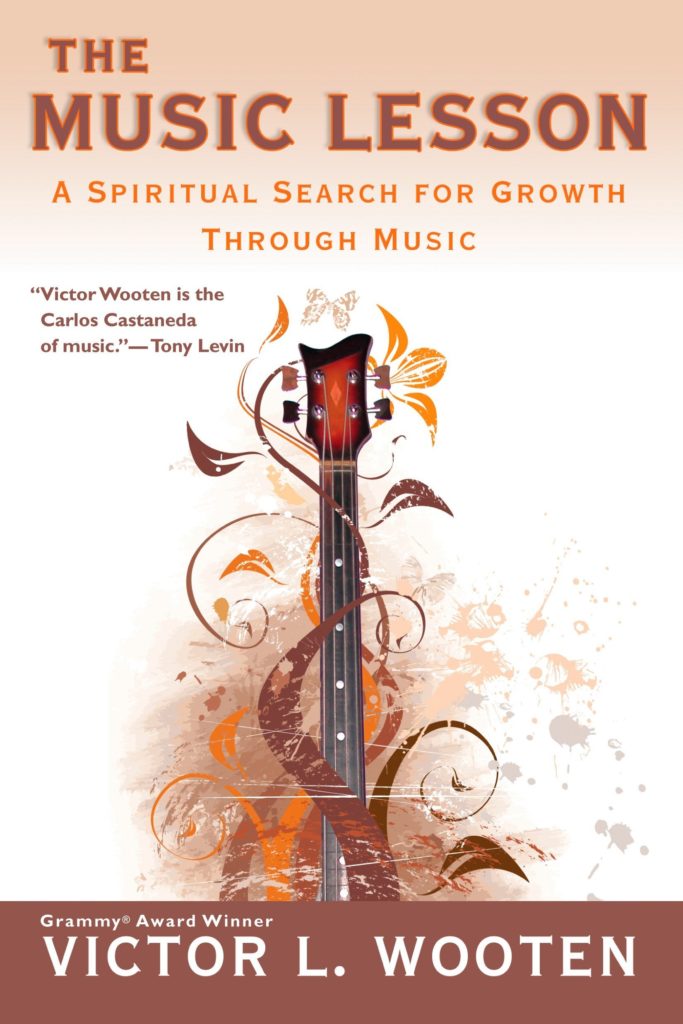
(Book Review) The Music Lesson by Victor Wooten

The Music Lesson by Victor Wooten

I just finished reading The Music Lesson. It was a very odd book. It’s going to take a bit to sink in.

Based on the intro, I was under the impression that it was a true story. At first that made me a bit of a skeptic, but once I realized it was a work of fiction meant to present lessons in the manner of Aesop’s Fables or a set a parables, it was much easier to enjoy.

It doesn’t say much about how to write or perform music, but it also teaches you how to learn everything you need to know about it.

It made total sense, but also didn’t. Some of the lessons are more ephemeral than others, and you’ll have to “feel” them rather than grasp them intellectually.

If you read it and think about the concepts in it and put them into practice, you will become a better musician, no matter your primary instrument. The core idea is that you should get to a state where you don’t have to think about notes or scales and music just flows through you, and each lesson is something that you’ll need to master in order to get to that point.

What Was stampscoinsnotes.com?

StampsCoinsNotes.com was a visual catalog of postage stamps, bank notes, and coins from around the world.

It started as i-collect-it.com back in 2009 when I started scanning stamps from my personal collection. In 2013 I renamed it to stampscoinsnotes.com to get rid of the hyphens and have a more accurate name.

Over the years I added more than 13000 images, with more than 9000 stamps, 2400 coins, and 1200 bank notes.

Honduras 20 Lempira Bank Note from 2014

A 20 lempira bank note from Honduras in 2014.

Here’s a screenshot from archive.org.

It was an interesting project (for me) with viewership that peaked around 2015 and gradually declined, regardless of how many items were added, until it wasn’t worth the effort of maintaining anymore. I shut the site down yesterday.

Now that you’re here, feel free to explore the blog a bit. I have a bunch of websites and music projects I’ve created, and you might find some of them interesting (under the “My Stuff” section of the sidebar).

Thoughts on Bidvertiser

Bidvertiser stands alone in that it is the only Adsense alternative that never made me angry.

It just worked. Setup was easy. There was no shady business, malicious javascript, browser hijacking, popover or popunder ads, push notification nonsense, or other user-alienating tomfoolery.

It’s the only ad network that I experimented with that didn’t make me want to turn on adblock on my own site, which had pretty minimal ads in the first place.

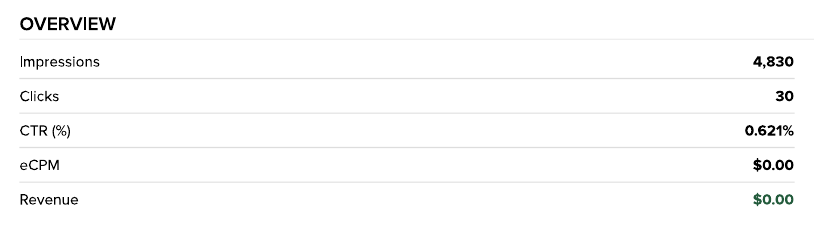
Earnings were terrible, as shown below. My site was a general-purpose non-niche site with global traffic based mostly in India, Pakistan, Turkey, and other non-high-revenue countries for advertising. In addition, the traffic volume was not high enough to attract anyone seeking to buy ads specifically on the site. Given that, take these earnings with a grain (or a bowl) of salt. Earnings would be much higher if your traffic was entirely from the U.S. Even so, the same traffic with Adsense would likely have earned around $8 or so.

If I had another site to monetize that was not compatible with Adsense, I’d use them again. I just wouldn’t expect to buy a fancy yacht from the earnings.

Outrage Is Useless

Before the algorithms took over the internet entirely, the news was obsessed with fear. Making people afraid was their goal, and it was what kept eyeballs glued to the screen.

As the internet evolved, fear was still in heavy circulation, and it benefited those who knew how to wield it. It was not just the news, but politicians and products meant to make you feel “safe”. But it started to change.

Over the past few years, thanks to “the algorithms”, I’ve noticed a shift more toward outrage than fear. When I visit a site, something is invariably presented that is meant to outrage me. Twitter does its best to make most of its trends political or “what celebrity did which outrageous thing you should get mad about”. Facebook shows me memes and news stories meant to make me mad, get my hackles up, and bring forth the fires of righteous indignation. So do all the other news and social media outlets.

When you’re presented with something, it’s worth taking a step back and looking at what sort of outrage it’s intended to provoke. Do you really want to waste your time yelling at some celebrity or making some 15-year-old kid cry for saying something ignorant on camera?

And when someone wants to direct their outrage your way, it’s best to just ignore it and let it blow over. It’s only temporary and in 10 minutes they’ll be outraged at someone or something else. Someone will always be offended by what you do or who you are. Don’t walk on eggshells for fear that someone might say something mean to you. Their opinions don’t matter, and that’s no way to live.

Outrage is useless. Don’t let it control you.

The WbSrch Experiment

Off-and-on over the last 8 years I’ve worked on an independent search engine called WbSrch. It made it as far as being as good as the late-1990s search engines, which is great, because the original goal was to build something much like Altavista. That was my first “main” search engine.

At one point I tried to turn it into a real business. That went poorly and I shut it down. Then I brought it back to work on as a hobby/fun project. That was interesting and fun for a while, but it’s run its course. I’ve done all the things I set out to do and learned all the things I wanted to learn. I’ve had my fun, so there’s no need to tinker with web search anymore. It did keep me busy toward the end of the pandemic as I was starting to go stir crazy, and I’m grateful for that.

If you’d like to see what it looked like when I finished with it, take a look at this capture on archive.org.

If you’d like to use a pretty good alternative search engine, I suggest Mojeek or Yandex. The MusicSrch music search engine is still going, too.

And if you’d like to get a copy of some of the data I collected, there are a few inexpensive data downloads available.

Now that you’re here, feel free to explore the blog a bit. I have a bunch of websites and music projects I’ve created, and you might find some of them interesting (under the “My Stuff” section of the sidebar).

PoSSE and Facebook

One core idea of the “Indie Web” is “Publish on Your Own Site, Syndicate Elsewhere” (PoSSE). The idea is that you post content on your own website first and foremost, and then mirror it to social networks such as Facebook. This gives you more control over the original content, keeping it from being hidden behind a walled garden and preventing it from disappearing if you are banned from a site, it shuts down, the algorithms decide you’re not interesting, or it just decides to hide things older than X years.

It’s a good idea, and I think I’ll be implementing it a bit more in my own life. Don’t be surprised if you see more posts showing up and backfilling the site with non-recent publication dates. Most of my activity is on Facebook, but there is a little on Instagram, and even less on Twitter.

The one obvious drawback to publishing things publicly on your own site is that it lacks visibility controls like “friends only”, which is valuable, but not foolproof because anyone can screenshot and forward anything. it does help keep down the number of randos sea-lioning into your conversations.

Since this blog intentionally does not allow comments, there’s little worry about that. There is still a little privacy concern, but as an Extremely Online Person, I don’t care much about privacy and everything is pretty much out there anyway.

Having Too Much Stuff

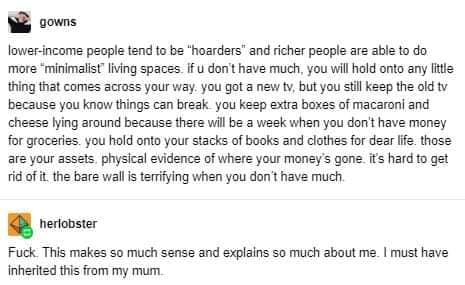
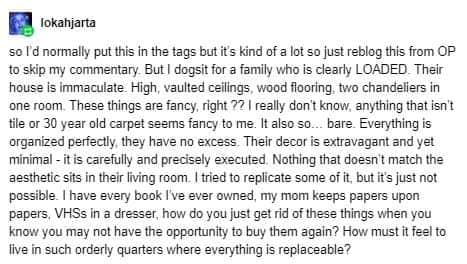
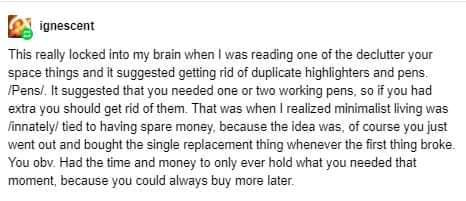
A lot of people, myself included, battle the accumulation of excess things. There’s a meme about minimalism vs. hoarding out there that goes into it, essentially that growing up without much makes it hard for people to let go of things they don’t necessarily need. I am not from a rich family.


A lot of people like to hate on minimalism because it’s “Just Another Boring Product Wealthy People Can Buy“, which the original post mentioned later in the thread. If that’s how you feel, by all means, live your life how you want. I certainly agree that white-on-white as an aesthetic is disgusting, and it’s why most American houses and apartments are hideously boring places I wouldn’t want to live. But to me a much worse aesthetic is “piles of stuff everywhere”. It’s visual distortion, and being in an ugly environment negatively affects my mood if I actually look at it.

The biggest trouble for me is that “the things you own end up owning you”. The more stuff you have, the less freedom you have, in more than one way. It could be less freedom to live in a small space, less freedom to get a piece of furniture someone’s giving away because it just wouldn’t fit, or less freedom to move to a new place because you’d need 8 days and a 60-foot moving truck to haul everything. It’s also less financial freedom because you’ve bought too much stuff, are spending a good chunk of your paycheck on a huge storage unit, or had to pay the movers for an extra 4 hours to get everything loaded.

If everything you own fits in your vehicle, it’s a whole lot easier to go live in a different city if you want to. More freedom.

It’s really hard to unlearn the collecting of things. A shelf full of books that you might read one day is easy to keep when the alternative is to get rid of them only to need to buy one of them again two years later because you suddenly got really interested in the topic. It’s hard to know whether keeping stuff or getting rid of stuff will be more expensive.

I think a good way to think about it is whether you would replace a particular thing if there was a catastrophic fire that destroyed everything you own. If the answer is yes, then by all means keep it. If the answer is no, maybe think about getting rid of it. There’s a lot of “I don’t know” gray area in that, but it’s a decent guideline.

“I might need this some day” is a cursed phrase.

For most objects, they’re just things and they don’t matter. The only real Human needs are food, shelter, a powerful laptop, and a good internet connection.

Removing Politics From Twitter

My disdain for Twitter is no secret. It is a cesspool of the worst people on Earth. But it does have some redeeming qualities if you can manage to filter out all the political nonsense

Here’s how I filter out most of the crap (there are a few more that go off the screen, but not that many).

I should really turn off trends, but instead I either click “Not interested in the topic” or “This trend is harmful or spammy” when I see anything political. Anecdotally, clicking “not interested” seems to have more effect. I also not-interested sports topics since I’m genuinely not interested in any sports. They don’t make me angry, though.

I also block everyone who looks even remotely annoying and have built a block list of around 1000 people over the past 10 years or so. My block list is insane and is about 90% MAGA idiots (and there seems to be a deep supply of them) and about 10% always-outraged liberals. Most of the MAGA scum on Twitter are either bots or morons who are indistinguishable from bots. This does of course mean that I’m missing out on the finer details of the United States’ inevitable descent into totalitarian fascism, which is a real loss.

All in all, it is a LOT of effort to de-politicize your Twitter feed, and it’s probably not worth it. If Twitter had any sense, which they don’t, they’d add an option to filter out political nonsense. I think they know that if they added that option, there would be almost nothing left and most of the wingnuts would leave, destroying their monthly active user numbers. So, instead of making it a decent place where you can find useful information, they made it a place full of angry assholes always getting angrier about things. That’s the thing with social media — the algorithms LOVE to keep people outraged and angry because that results in more eyeballs-glued-to-the-site time.

My feed is for the most part now a mix of cute capybara pictures, 3D art, and pictures of Spain. You should probably follow CAPYBARA_MAN.

Or just don’t bother wasting your time with Twitter. That’s always an option. Fear not, you’re missing out on nothing.

My Musical Hiatus 2003-2015

I didn’t release much in the way of original music from 2003 to 2015. There was just the Positronic Empire album, which is more of an EP, and the Agaritine album, which is all software-created remixes.

I was focused on other things. From 2003-2005, pretty much all of my time was focused on finishing college. After that, I spent a decade establishing myself in a career in software, going from total n00b to a manager with a team of 5. That didn’t leave much time or motivation for music.

Most of the drum beats for 2008’s Positronic Empire were written in 2005 just as I was finishing school. I dug them out a few years later and finished them during a week of vacation. In 2012, the remix album Agaritine was created using the Echo Nest Remix API (which is now called Amen).

It wasn’t until 2015, after having built one of everything software-wise and having founded multiple startups, that I got back into music in a big way. Since then I released 13 albums as Bloodless Mushroom, three as Toilet Duck Hunt, an album and an EP as OJ Champagne, and a handful of singles as Rain Without End, and an EP with Sasha and The Children, a band that I performed live with for about a year.

In the middle of the pandemic, I got burnt out on music and didn’t really have any creativity flowing. I think creativity requires new experiences, and lockdown turned the new experiences knob down to zero. I’m only just now getting back into it as things have opened back up and will probably release another album this year. I don’t know if I have much more in me after that. I’m also sensing (and planning) a new wave of major life change, which may or may not bring musical creativity along with it.

Whether I do or don’t create more music isn’t particularly important. I’ve done a lot. I’ve released more music than most professionals do in their lifetime. I doubt that I’ll be remembered for my music, but that’s OK. I’ve only ever made it for myself and for my creative enjoyment.

Gear Hoarding

I’m thinking back to the time when I bought my first piece of music gear on eBay in 2001. It was a Yamaha TX81Z FM rack synth module, fairly beat up. It had a lot of cheesy, useless-sounding patches and a few really nice ones. I had a Yamaha DJX keyboard that my mom had bought me the previous Christmas. Together, with those two pieces of gear, I wrote Forest of Worlds at the house at 4026 Westway in Toledo. I didn’t have much other gear, just a bass guitar (I think it was an Ibanez Ergodyne EDC705, but it might have been something else) and an electric guitar, a modified Peavey Predator with a multi-effect pedal. There was really nothing I couldn’t do with that gear given enough talent/skill. Which I didn’t have yet.

Before Forest of Worlds, I had never written any music using the keyboard. Sure, there was a track where the DJX was playing drum sounds on my first album, but that wasn’t keyboard music. Before that, I had only written tracker, fractal, and guitar tunes. While it opened a whole new world of synthesizer music and spawned some beautiful-to-me songs like Trepidation, Encounters, Gliding, Cosmic Serenade, Quelet, Montagne, and others (in spite of the core of Bloodless Mushroom being a mix of fractal and tracker tunes), it also created a monster. From that moment on I started hoarding gear, collecting things less because they served a useful purpose and more because I could. I wanted to have every possible sound at my fingertips. I wanted to experience and explore everything out there in the world. And I pretty much did.

While the time spent playing and practicing made me a better musician, the gear hoarding did not. In fact, it actively detracted from my musicianship. I spent too much time fiddling with gear, noodling, and just shuffling things around, and not enough time practicing and writing music. I did create the SoundProgramming website from my explorations, which has helped a lot of people explore gear and get manuals for it, so it wasn’t all wasted effort.

Now I have every sound imaginable at my fingertips. I have so much software and so many libraries that there’s nothing I can’t do electronically (my sample library is more than 600 gigabytes). Since Bloodless Mushroom was always more of a tracker-and-fractal project, I never needed anything more than a laptop to write music in the first place. I certainly don’t need a whole room full of gear. In fact, the more in-the-box I work, the more creative I seem to be.

Just give me a keyboard (with MIDI). Practically any keyboard will do, but full-size keys help. Just give me a bass guitar and regular guitar and a cord to connect them with. The make and model doesn’t even matter, as long as they stay in tune. I do not need more gear than I can carry on my back. Well, as long as I’m not playing/writing drums. A real electronic or physical kit won’t fit on my back.

Proof of this just-plug-something-in-and-go is in the Rain Without End songs. They’re really just me multitracking guitar and bass. And it sounds good. Not perfect by any means, but I can put together nice-sounding ideas that people enjoy.

I must confess that using three GM-capable synths like I did for the Gymnopus album sure does sound good, though. All that can be achieved in software like Kontakt, of course. It just requires more detail work. If I do that work, the quality will be far beyond anything I could get with a 17-year-old hardware module.

What I’m trying to say is this: I don’t need to take any of this stuff with me. I can get what I need wherever I am, and I don’t need much.
RevenueHits Turned Out To Be Entirely Worthless

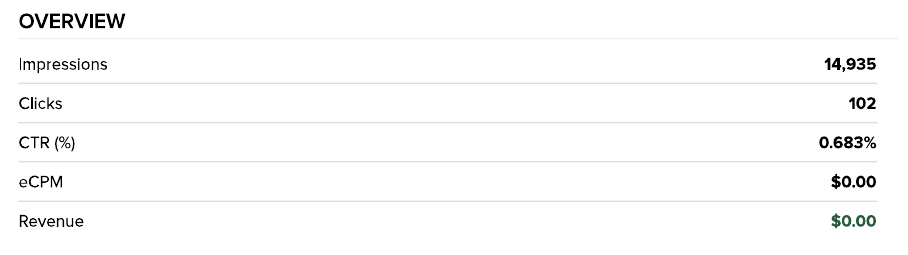
I’ve been running RevenueHits on one of my websites for about the last 5 months in a rotation with other ad networks. The site doesn’t get a huge amount of traffic, and it’s global, so I don’t expect massive returns. But I didn’t expect zero.

Here are my stats for May 2021.

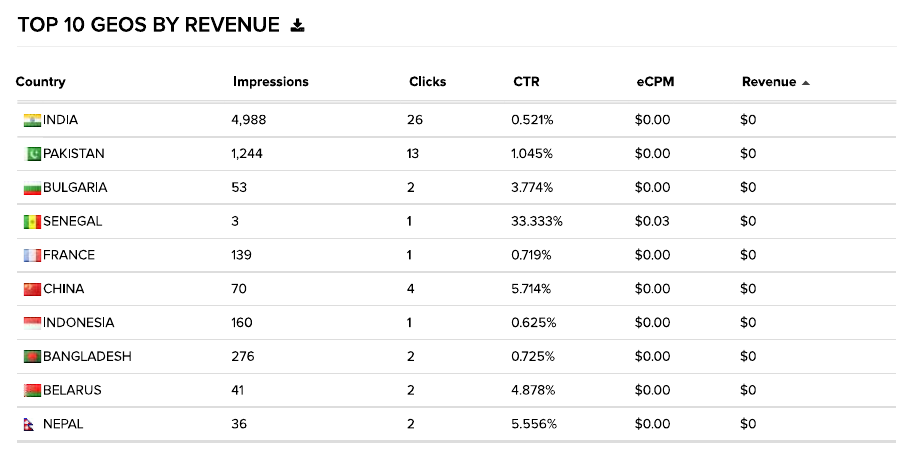
And here are my stats for all of 2021:

For all of 2021, here are my top geographies:

A large percentage of my traffic comes rom India, Pakistan, and Bangladesh, so I shouldn’t be getting $100 CPMs.

However, anything less than a tenth of a cent per click or a $0.01 CPM is unacceptable and pointless for even the most low-paying geographic locations. I know those 102 clicks earned them more than $0.00.

I’ve removed RevenueHits from my site since they couldn’t even be bothered to send me a token fraction-of-a-penny like most barely-legit ad networks would have.

Bidvertiser was also running as one of the ad networks in rotation alongside RevenueHits and did generate earnings during this same time period. It’s the only ad network that I can trust to generate earnings from global traffic and so far they’ve proven themselves as the best Adsense alternative, which is why they’re the only provider left standing. There might be somewhere that would earn more, but doing so without shady popover/popunder ads, spammy push requests, interstitials, or any of the shady scammy tactics that make the internet almost unusable would be pretty difficult.

At some point I might run the which-ad-network-do-I-use experiment again, but it might be just about as much work to create one. It probably wouldn’t earn less.